


BẠN ĐANG TÌM KIẾM CÁI GÌ?
Introduction
Starting a block factory in Africa can be a promising business opportunity, especially in areas with growing construction activity and demand for affordable building materials. However, success depends on more than buying a block making machine.
Investors must consider local demand, land availability, electricity supply, labor costs, raw material prices, transportation, and working capital.
A machine with high advertised output will not automatically generate high profits. The right investment is a production system that matches your local market, budget, and operating conditions.
This guide explains the key factors to consider before starting a block factory in Africa and how to avoid common investment mistakes.
1. Choose the Right Block Making Machine
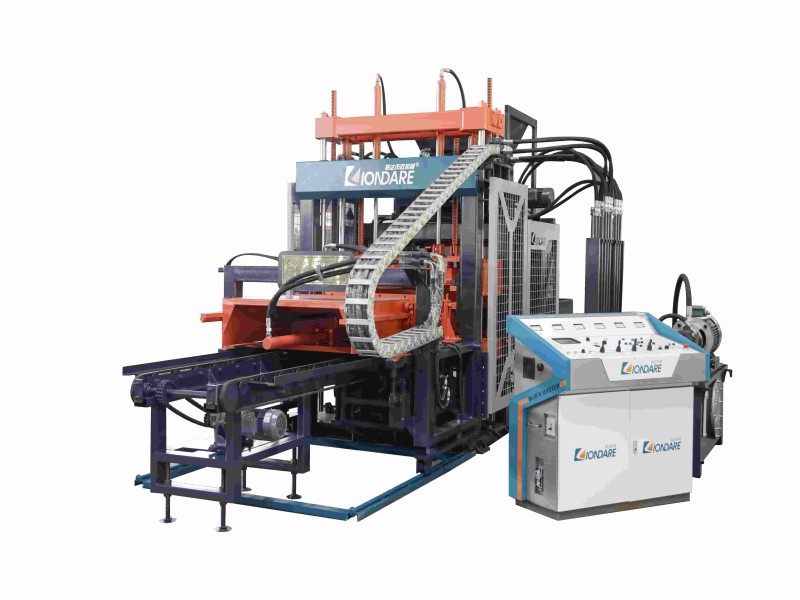
The first step is choosing a block making machine that matches your expected sales volume.
Different production systems suit different business sizes.
Manual or mobile block making machines are suitable for small businesses, construction projects, and markets with limited startup capital. They generally require more manual labor but can be easier to operate.
Semi-automatic block making machines offer a balance between investment, production efficiency, and labor requirements. They are worth considering for businesses supplying local builders, contractors, and building material dealers.
Fully automatic block making machines are better suited to established businesses with consistent demand, sufficient working capital, and reliable utilities. They can reduce manual handling and improve production consistency, but require a larger investment and more technical support.
Before purchasing, confirm the machine’s realistic output for your specific block size, mold, mix design, and working hours. Ask the supplier to distinguish theoretical capacity from actual daily production.
2. Select Land That Supports Efficient Production
Land is not just a place to install your machine. It determines how efficiently your entire factory operates.
Before renting or purchasing a site, consider:
* Market access: Is the factory close to construction sites, building material dealers, and major customers?
* Raw material supply: Can cement, sand, and aggregate be delivered at a reasonable cost?
* Transportation: Can trucks enter, turn around, load blocks, and leave without delays?
* Production space: Is there enough room for the machine, mixer, aggregate storage, finished blocks, and curing?
* Drainage and ground conditions: Can the site remain usable during heavy rain?
Do not calculate land requirements based only on the machine’s footprint. Block production also needs space for material storage, fresh blocks, curing, and finished inventory.
A strategically located, moderately sized factory can be more profitable than a larger factory far from customers.
3. Calculate Electricity and Backup Power Costs
Electricity is an important factor when selecting a block making machine in Africa.
Some locations have reliable grid power, while others experience outages or voltage fluctuations. These conditions can affect production schedules, equipment performance, and delivery commitments.
Before installation, check the local power supply, the machine’s installed electrical load, starting current, and the requirements of the mixer and auxiliary equipment.
If backup power is necessary, calculate the cost of a suitable generator, fuel, maintenance, and any additional electrical equipment. Have a qualified electrician confirm the required capacity rather than choosing a generator based only on its advertised rating.
For a small operation, a simpler machine may be easier to operate under limited infrastructure. For a larger factory, reliable power and a properly designed electrical system become increasingly important.
Practical tip: Compare the total operating cost of grid electricity and backup generation before deciding which production system offers the best return.
4. Plan Labor and Daily Operations
Labor requirements depend on the machine’s automation level, handling system, production volume, and working arrangements.
A small factory may need workers for mixing, machine operation, moving fresh blocks, curing, stacking, loading, and cleaning. A more automated plant can reduce some manual tasks, but still requires trained operators and maintenance personnel.
When estimating labor costs, include more than wages. Consider overtime, training, worker safety, staff turnover, and the cost of production interruptions caused by inexperienced operators.
The most effective way to control labor costs is to organize the production process clearly.
For example, the mixing team should supply material consistently, the machine operator should maintain stable production settings, and the handling team should move fresh blocks without damaging them.
Training is especially important when a new block making machine is installed. Ask the supplier whether installation guidance, operator training, maintenance instructions, and spare parts are included.
5. Understand the Full Cost of Starting a Block Factory
One of the most common mistakes new investors make is budgeting only for the block making machine.
A realistic startup budget should include:
* Block making machine and required molds.
* Concrete mixer and batching equipment.
* Shipping, import duties, customs clearance, and inland transportation.
* Site preparation, concrete flooring, drainage, and shelter.
* Electrical installation, water supply, and backup power if needed.
* Pallets, handling equipment, tools, and initial spare parts.
* Cement, sand, aggregate, and other initial materials.
* Installation, commissioning, and worker training.
* Working capital for wages, utilities, maintenance, and unsold inventory.
The final investment varies significantly by country, machine configuration, import costs, site conditions, and the level of automation.
Request an itemized quotation rather than comparing suppliers by machine price alone. A lower-priced machine may not be the more economical option if essential equipment, installation, training, or after-sales support is missing.
Most importantly, keep sufficient working capital to operate while building a stable customer base.
6. Calculate Production Cost per Block
Understanding the cost of each block is essential for pricing products and protecting profit margins.
A useful calculation is:
Production cost per block = Total production costs ÷ Number of acceptable blocks produced
Include cement, sand, aggregate, water, labor, electricity or fuel, maintenance, and other operating expenses. Depending on your accounting method, also allocate rent, equipment depreciation, financing costs, and other overheads.
For example, if a factory spends $1,200 producing 6,000 acceptable blocks, its production cost is $0.20 per block.
This is only an illustrative calculation, not a market price or profit estimate. Actual costs depend on local material prices, block dimensions, mix design, labor productivity, and equipment efficiency.
Remember to count acceptable blocks, not just total blocks produced. If poor compaction, handling damage, or inadequate curing creates a high rejection rate, the cost per saleable block increases.
Review production costs regularly, especially when cement prices, fuel costs, or delivery expenses change.
7. Secure Customers Before Expanding Production
A factory can produce thousands of blocks every day and still lose money if sales are inconsistent.
Before investing in a high-capacity machine, research local demand and identify potential customers, including construction contractors, property developers, hardware stores, and independent builders.
Check which block sizes are commonly used, what quality standards customers expect, how competitors price their products, and whether buyers require delivery.
Quality and reliability matter as much as price. Consistent dimensions, appropriate compressive strength, proper curing, and dependable delivery help build long-term relationships.
If demand is uncertain, consider starting with a manageable production capacity and expanding after sales become more predictable.
Existing factory owners should also review sales and inventory before increasing machine capacity. Improving utilization, reducing waste, and strengthening customer relationships may deliver better results than buying another machine.
8. How to Choose a Reliable Block Machine Supplier
A suitable supplier should help you plan the entire production system, not simply sell you a machine.
Before placing an order, ask the supplier:
* Can the machine produce my required block sizes and shapes?
* What is the realistic daily output under my working conditions?
* What mixer, batching system, molds, and handling equipment are required?
* Can the machine be tested using my local raw materials?
* What installation support, operator training, warranty, and spare parts are available?
* What are the shipping, installation, and commissioning costs?
If possible, request a production demonstration and verify block quality rather than relying only on catalog specifications.
For overseas buyers, confirm the availability of technical support and replacement parts in your region. A machine that is difficult to maintain can become expensive even if its initial purchase price is attractive.
Conclusion
Starting a block factory in Africa requires careful planning, realistic cost calculations, and a clear understanding of local market demand.
The right block making machine is only one part of the investment. Land, electricity, labor, raw materials, curing space, transportation, and working capital all affect profitability.
Start by researching customers, estimating the cost per saleable block, and choosing a machine that matches your expected sales volume. Compare complete project costs and verify the supplier’s technical support before making a purchase.
The best block factory is not necessarily the one with the biggest machine. It is the one that produces quality blocks consistently, controls costs, and sells enough products to generate sustainable profit.
FAQ
1. How much does it cost to start a block factory in Africa?
The cost depends on the country, machine type, production capacity, land, utilities, and installation requirements. A small manual operation requires a different budget from a fully automated plant. Prepare a complete budget covering equipment, site preparation, shipping, raw materials, and working capital before investing.
2. Which block making machine is best for a startup in Africa?
A manual or semi-automatic machine may be suitable for a startup with limited capital and moderate local demand. A fully automatic machine is more appropriate when demand is stable, production volume is high, and reliable power and technical support are available.
3. How much electricity does a block making machine consume?
Electricity consumption varies by motor capacity, automation level, mixer size, auxiliary equipment, and operating hours. Ask the supplier for the installed load and expected energy consumption under your production conditions. If a generator is needed, include fuel and maintenance in the cost calculation.
4. How can I reduce the production cost per concrete block?
Control cement and aggregate consumption, maintain consistent moisture and mixing, reduce damaged blocks, improve curing and handling, and schedule production efficiently. Compare costs using the number of acceptable blocks produced, rather than total machine output.
5. Can I start a block factory with a semi-automatic machine and expand later?
Yes. A semi-automatic machine can be a practical starting point if it meets local demand and your budget. Before purchasing, check whether the site layout, electrical infrastructure, mixer, curing area, and handling system can support future expansion.
 One kilometer away from the exit of Nanshi Expressway in Rongqiao Project Concentration Area, Nan'an City
 E-mail
: admin01@liandamachine.com



 Hỗ trợ mạng IPv6